Begin

A letter from the founder

Ansh Lakhanpaul

Ansh Lakhanpaul

For two years, I lived in England. I travelled the length of it and made friends from Peru, Oman, Nigeria, China, and from England itself. I came home with more photographs than I could count.

When I look through them now, I find I have already lost half of what they held. When our Japanese course ended, a few of us took our lecturer to dinner to thank her. She encouraged us to try a Japanese plum wine, and it was delicious. I cannot remember its name now, or the restaurant's, or the street it was on. Worst of all, I cannot remember what she and I talked about, only that it was a lovely conversation.

The pictures kept the places. They did not keep what it felt like to be there.

You may have a shelf like it: somewhere everyone at your table has been, photographed, and put away.

I wished someone had written it down for me. Something I could open years later and read as if for the first time, until, line by line, it came back.

That is what Narada does. Before you leave, we listen, and then we write your journey as a book: one edition, yours. Then we make it happen. Afterwards it stays on your shelf, waiting for the day you have forgotten enough to be surprised by it, and for the people who come after you.

I would rather do this for a few people properly than for many people quickly.

If there is a journey you want to remember long after the photographs have gone quiet, write to me. The first conversation is always with me, and it is never about a place.
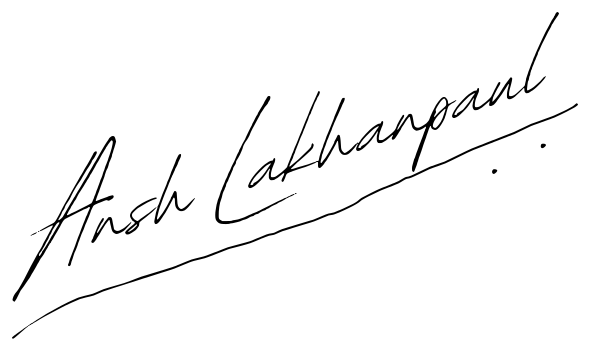
Ansh Lakhanpaul

Ansh Lakhanpaul
Founder, Narada

P.S. Write to me at house@thenarada.com.
What the house holds to.

The Standards

Wherever a journey goes, it is held to one standard.

  1. Everyone who meets you was chosen by Narada.
  2. Nothing you read arrives from anyone else.
  3. Cars and timings never touch the line that carries the story.
  4. Nothing is sold to you on the journey.
  5. Every queue, every wait, every form is gone before you reach it.
  6. Nothing leaves the journey, no name and no photograph, without your written consent.

What the house refuses

A house is defined as much by what it refuses as by what it keeps.

  1. The idea that fortune is the same as feeling.
  2. Anything off a shelf, or printed for everyone.
  3. Anything taken from a list, and any list asked of you.
  4. Been there, done that.
  5. Anything beneath the figure, and anything reduced to reach it.

The messenger across three worlds and all of time.

Narada takes its name from Narada Muni, a sage divinity of Hindu mythology. A wandering musician and storyteller, he carries news between worlds, and he alone moves freely through all three realms.

Swarga, the heavens.
Prithvi, the earth.
Patala, the world below.

He knows the past, the present and what is coming. Wherever he arrives, he brings a story worth hearing.

A messenger who has been everywhere, carries every story, and knows what is coming before you do.

A description of this house, written three thousand years early.

Narada Muni

Narada Muni, with his veena, among the clouds

Who this is for.

Narada is for the person for whom the places have stopped working. A couple at the start of everything. A family of three generations who want the grandparents and the children in the same story. Four friends who have known each other for thirty years. Someone whose calendar has not belonged to them in twenty years. Someone going alone, on purpose. Often the one who writes first is the one who plans for everyone else. They are welcome.

The house does not ask which of these you are. It asks what moved you last.

Begin the conversation